
RESTORATIVE DENTISTRY
Dental Bridges
Complete Your Smile and Restore Your Self-confidence with Natural-looking Dental Bridges
Any tooth missing in your mouth leaves a noticeable gap. Mouth spaces mar your appearance and affect your chewing and speaking ability. Besides, the adjacent teeth lack the necessary support, making them move into the empty space. When your teeth shift, they mess up with your alignment, which can cause TMJ-related pain.
The good news is that you don’t have to live with the embarrassment of missing teeth — there are several options to replace your missing teeth for a complete, more functional smile. When you have one or more missing teeth, porcelain dental bridges from Covington Family Dentistry are perfect tooth replacement solutions.
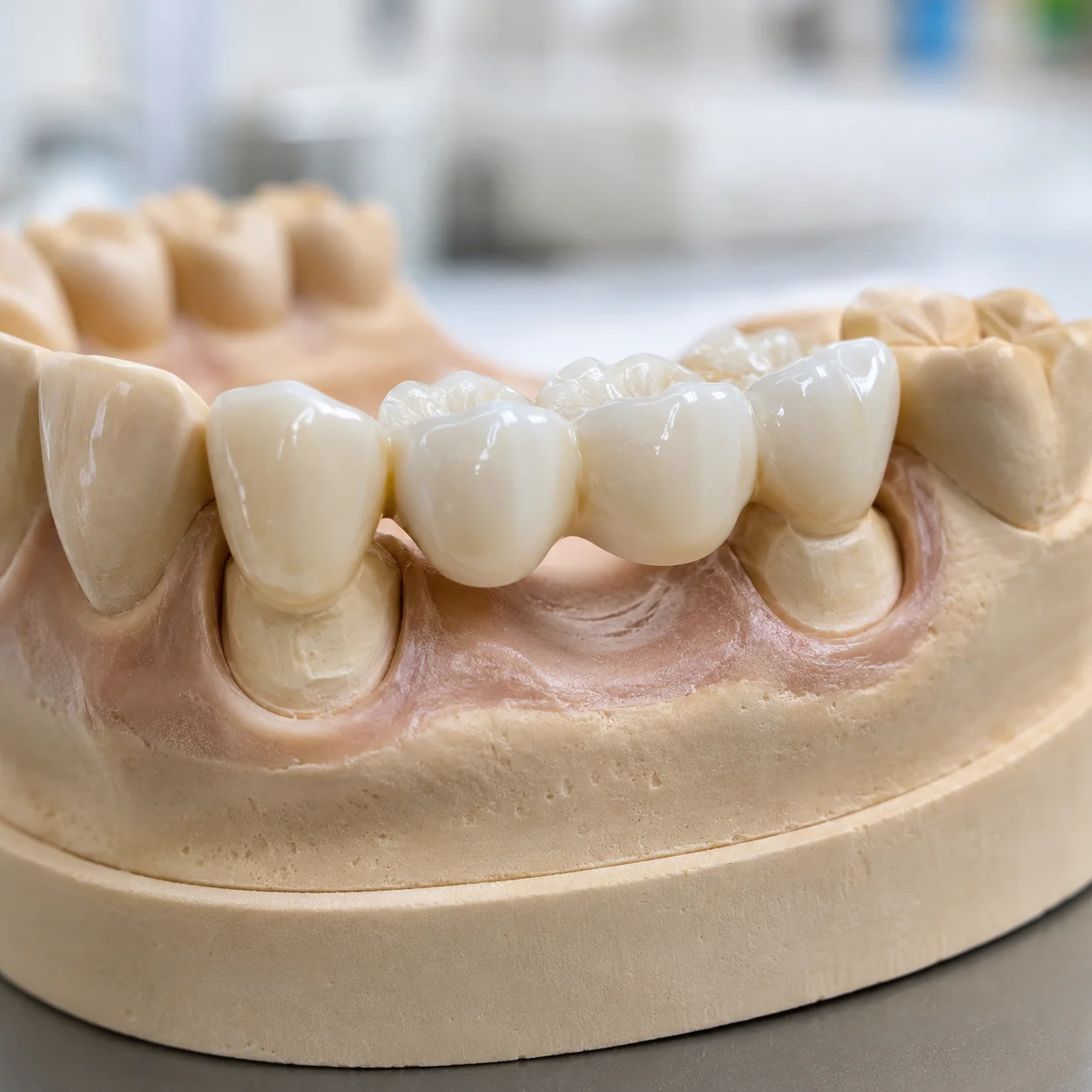
A dental bridge is a fixed tooth-replacement option used to fill the space left by one or more missing teeth. At Covington Family Dentistry, treatment planning considers the missing-tooth space, the health of the supporting teeth and gums, your bite, appearance goals, and other replacement options before a bridge is recommended.
MISSING TEETH
Do Not Let Missing Teeth Limit Your Smile or Daily Function
Missing teeth can change more than the appearance of your smile. Depending on the location of the gap, they may affect chewing, speech, confidence, and how the remaining teeth contact each other.
Smile Appearance — A bridge fills a visible space with a custom replacement designed to coordinate with the surrounding teeth.
Chewing Function — Replacing a missing tooth can help restore a more complete chewing surface and distribute biting forces more effectively.
Speech Support — Teeth contribute to the way certain sounds are formed, so replacing a gap may support clearer pronunciation for some patients.
Tooth Position — An untreated gap can allow neighboring or opposing teeth to change position over time.
Confidence — A fixed replacement can help patients feel more comfortable smiling, speaking, and eating in everyday situations.
THE PROCESS
The dental bridge procedure
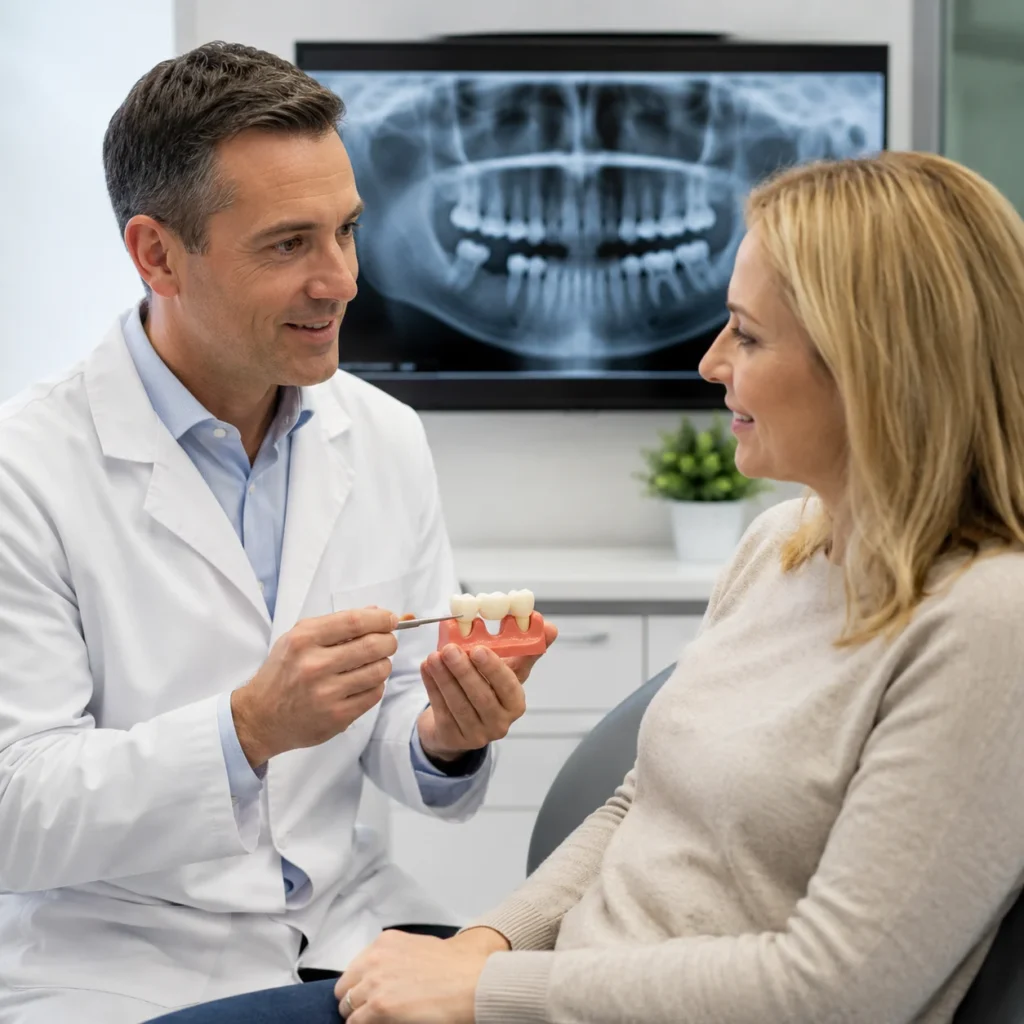
You only need two dental appointments to replace missing teeth with dental bridges. The objective of the first appointment involves evaluating your dental health to rule out cavities and gum disease. We also scrutinize your mouth to establish whether a bridge is ideal for replacing your teeth.
Once we give you the go-ahead for a dental bridge, we file down the abutment teeth to create space for crowns. Next, we take your bite impressions and send images to a lab technician to create your appliances. Until your tooth replacement is ready, we will install temporaries to ensure you continue using your smile.
We will give the lab a couple of weeks to create your natural-looking dental appliances. When they are ready, you will book an appointment with our dentist for fitment. We use dental cement to bond your dental bridge in place. Before you leave, we make several adjustments until your bite feels natural.
THE BENEFITS
Benefits of Replacing Missing Teeth with a Dental Bridge
HOW BRIDGES WORK
How dental bridges work
-
One Missing Tooth
A bridge can replace a single tooth when the neighboring support and bite make this approach appropriate.
-
Several Adjacent Missing Teeth
Certain bridge designs can replace more than one neighboring missing tooth, depending on the length of the space and available support.
-
Traditional Fixed Bridge
A conventional fixed bridge typically uses crowns on supporting natural teeth with one or more pontics filling the gap.
-
Implant-Supported Bridge
When several teeth are missing, selected patients may be candidates for a bridge supported by dental implants rather than natural teeth.
-
Porcelain / Tooth-Colored Options
Restorative materials may be selected to achieve a natural-looking appearance while meeting functional requirements.

Comfortable. Personalized. Built Around You.
A dental bridge is preferable if you are missing one or several teeth in a row. A dental bridge consists of false teeth (pontic) clasped onto the surviving teeth using dental crowns. The dental bridge fits into the toothless gap and attaches to crowns mounted on healthy teeth (abutments) on either side of the gap. Dental bridges can be made from zirconia or metal. However, many dentists opt for porcelain because it’s durable and can be designed to match the size, color, and shape of your natural teeth.
When to Seek Care
Affordable dental bridges near me
Want to replace your missing teeth in Covington, GA? Please dial (770) 787-2230 to schedule an appointment with Drs. Doreen Wilson and John Hendricks. We offer numerous types of dental bridges, including fixed and removable ones, to suit different needs.
A dental bridge may be considered when one or more teeth are missing and the supporting teeth, gums, and bite can support the planned restoration. We also compare a bridge with other tooth-replacement options so you can understand the advantages and limitations of each approach.
- You have one or more missing teeth.
- The teeth and gums around the space are healthy enough to support treatment.
- You prefer a fixed replacement option when clinically appropriate.
- You are willing to maintain careful brushing and cleaning under and around the bridge.
- You want to compare bridges with implants or removable partial dentures before deciding.

WHY CHOOSE COVINGTON FAMILY DENTISTRY?
Restorative Care Planned Around Your Smile
Individual Treatment Planning
We evaluate the missing-tooth space, supporting teeth, gums, and bite before recommending a bridge.
Natural-Looking Restorations
Bridge design considers the shape, shade, size, and position of the surrounding teeth.
Compassionate, Family-Focused Care
Our team explains each stage, answers questions, and works to make restorative treatment feel clear and manageable.
Long-Term Maintenance Guidance
We explain how to clean around and under the bridge and how routine dental visits help monitor the supporting teeth and gums.
PATIENT STORIES
What Our Patients Say
The source page describes a bridge as a replacement tooth or teeth called pontics that fill the missing-tooth space and are supported by crowns on healthy abutment teeth on either side of the gap. Some bridges may instead be supported by dental implants depending on the treatment plan.
The source page describes a two-appointment process: the first visit evaluates and prepares the supporting teeth and takes records, while the second fits and cements the final bridge after laboratory fabrication. The exact number of visits can vary based on the bridge design, temporary restoration, adjustments, and the practice’s current workflow.
The source page mentions zirconia, metal, and porcelain. The material selected depends on the location of the bridge, bite forces, appearance goals, and the design recommended by your dentist.
Because the replacement tooth is connected to the supporting crowns, daily cleaning under the bridge is important. Your dental team may recommend floss threaders, interdental brushes, a water flosser, or another method suited to the bridge design.
Neither option is automatically better for every patient. A bridge and an implant use different types of support and have different treatment requirements. Your dentist can compare them based on your oral health, anatomy, neighboring teeth, goals, treatment timeline, and budget.
Cost depends on the number of teeth being replaced, bridge design, supporting teeth or implants, materials, and the overall treatment plan. Schedule a consultation for an individualized estimate and ask about the practice’s current financing options.
Related Articles
Check Out Related Articles for Dental Bridges

Replacing missing teeth doesn’t just restore your smile; it helps preserve your overall oral health and confidence. At Covington Family Dentistry in…